
×
Home
Buy
Sell
Reviews
Compare
Specifications
Tips
News
Finance
Privacy
Terms & Conditions
© 2025 bdcars360.com

More specs
More specs
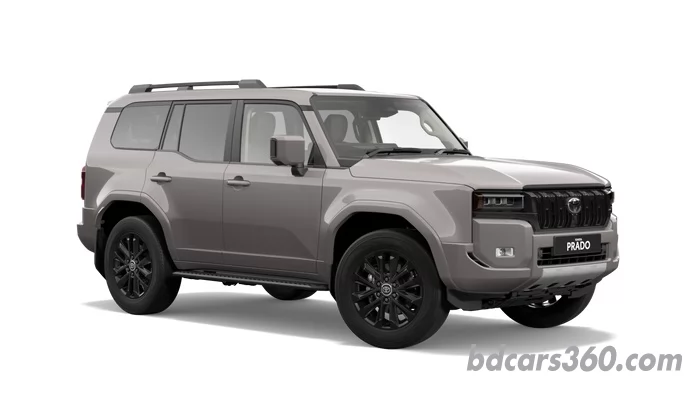
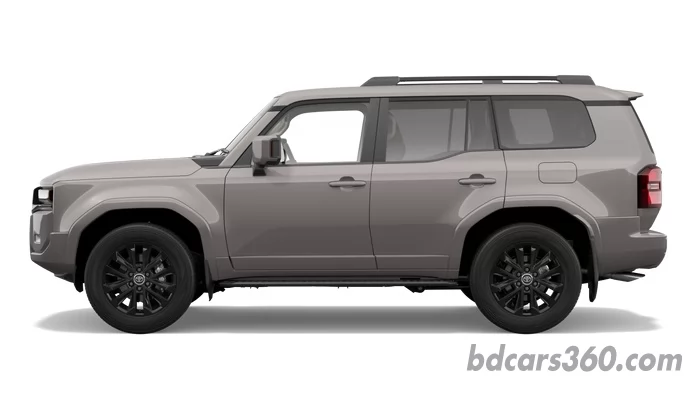
Toyota Prado Kakadu 2025 Specs
8 photos
Overview
|
Measurement
|
Engine
|
Chassis
|
Equipment
Overview|
Measurement|
Engine|
Chassis|
Equipment
| Make | Toyota |
| Model | Prado Kakadu |
| Year | 2025 |
| Body Type | Crossover SUV |
| Drive | 4X4 |
| Transmission | 8-speed automatic transmission |
| In city Mileage | 11.8 km/L |
| Out of city Mileage | 14.3 km/L |
| Luxury Car | Yes |
| Hybrid car | Mild Hybrid |
| Length | 4,990 mm (196.5 inches) |
| Width | Without mirrors: 1,980 mm (78.0 inches)/with mirrors: 2,140 mm (84.3 inches) |
| Height | 1,935 mm (76.2 inches) |
| Gross Vehicle Weight | 3,200 kg |
| Curb Vehicle Weight | 2,590 kg |
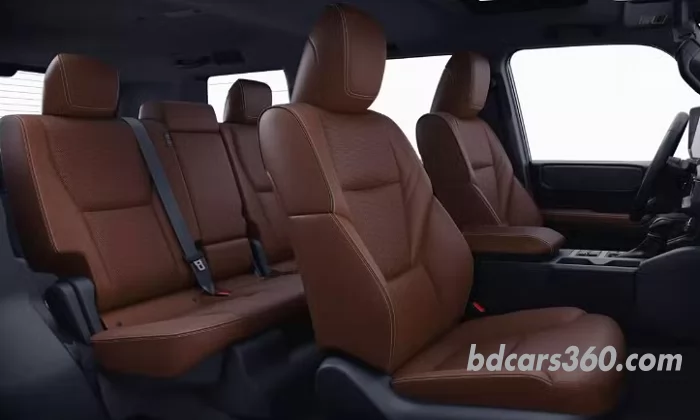
| Seating Capacity | 7 |
| Doors Number | 5 |
| Wheel Base | 2,850 mm (112.2 inches) |
| Treads | Front Track: 1,664 mm (65.5 inches)/Rear Track: 1,668 mm (65.7 inches) |
| Ground Clearance | 221 mm (8.7 inches) |
| Minimum Turning Radius | 6.0 metres |
| Fuel Tank Capacity | 110 litres |
| Displacement | 2,755 cc |
| Engine Model | 1GD-FTV |
| Engine Type | 1GD-FTV 2.8-litre inline 4-cylinder, DOHC, 16-valve common-rail turbo-diesel with a 48V mild-hybrid V-Active system |
| Engine Info | 2.8-litre 4-cylinder turbo-diesel engine |
| Max Power | 201 hp |
| Max Torque | 500 Nm |
| Top Speed | 170 km/h |
| Fuel System | Advanced Common-Rail Direct Injection (CRDi) |
| Fuel Type | Diesel |
| Compression Ratio | 15.6:1 |
| Final Gear Ratio | 3.583:1 |
| Forced Induction Type | Turbocharger |
| Bore | 92.0 mm |
| Stroke | 103.6 mm |
| LEV (Low Emission Vehicle) | No |
| Push Start | Yes |
| Battery capacity | 0.21 kWh |
| Electric Motor Poower | 8.4 kW |
| Tire Size (Front) | 265/55 R20 |
| Tire Size (Rear) | 265/55 R20 |
| Steering System | Electromechanical |
| Electric Steering | Yes |
| Braking System (Front) | Heavy-duty ventilated discs |
| Braking System (Rear) | Ventilated Discs |
| Suspension System (Front) | Independent, double-wishbone setup |
| Suspension System (Rear) | Rigid (solid) live axle with a multi-link (5-link) control arm configuration |
| Wheel Rim | 20 inches |
| Exterior | |
|---|---|
| Sunroof | Yes |
| Front Fog Light | Yes |
| Rear Fog Light | Yes |
| Xenon Headlight | No |
| Projector Headlight | Yes |
| Rear Wiper | Yes |
| Front Spoiler | No |
| Rear or Roof Spoiler | Yes |
| ABS (Antilock brake system) | Yes |
| TCS (Traction control system) | Yes |
| Traction System | Electromechanical |
| Privacy Glass | Yes |
| UV cutting glass | Yes |
| Aluminium Wheel | Yes |
| Interior | |
| Air Conditioner | Yes |
| Wood Panel | No |
| Cruise Control | Yes |
| Centralized Door Lock | Yes |
| Power Window | Yes |
| Steering Wheel Telescopic | Yes |
| Steering Wheel Tilt | Yes |
| Leather Steering Wheel | Yes |
| Power Front Seat | Yes |
| Power Rear Seat | Yes |
| Leather Seat | Yes |
| Falling Down Type Rear Seat | No |
| Child Seat Fixed With Seat Belt | Yes |
| Rear ELR Seat Belt | Yes |
| Front Seat Pretensioner Seat Belt | Yes |
| Front ELR Seat Belt | Yes |
| Side Impact Bar | Yes |
| Airbag (Driver) | Yes |
| Airbag (Passanger) | Yes |
| Airbag (Side) | Yes |
| Audio Deck | -- |
| CD-player | -- |
| Car Navigation System | Yes |
| More Infotainment Features | |
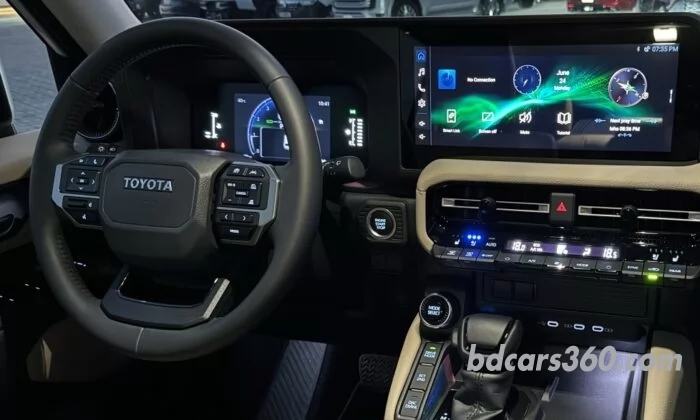
| Audio and Connectivity Premium Audio: Fully integrated with a premium 14-speaker JBL sound system including a dedicated cargo-area subwoofer. Wireless Smartphone Integration: Full-screen capability for both wireless Apple CarPlay and wireless Android Auto. Physical Multimedia Ports: Includes multiple fast-charging USB-C connectivity slots alongside a dedicated HDMI port located under the central dash stack. Wireless Charging: Equipped with a standard high-output Qi wireless phone charging pad inside the lower center console tray. Driver Tech Displays Digital Instrument Cluster: A highly configurable 12.3-inch digital driver telemetry display capable of projecting 3D navigation maps, traditional gauge options, and detailed 4x4 drivetrain data. Head-Up Display (HUD): A full-color HUD that projects live driving speeds, safety prompts, and navigation arrows directly onto the lower windshield glass glass. Digital Rear-View Mirror: An electronic high-definition mirror screen fed by a rear-mounted camera lens, ensuring visibility isn't blocked by luggage or third-row passengers. Connected & Digital Services Toyota Connected Services: Features 12 months of standard subscription access supporting over-the-air (OTA) map software updates and advanced satellite live traffic details. Remote Smartphone Control: Connects via a smartphone app to enable Remote Engine Start, remote door locking/unlocking, vehicle geofencing, and remote HVAC climate activation (pre-heating or cooling the cabin). Multi-Terrain Camera Interface: The 12.3-inch touchscreen acts as the primary viewfinder for the 360-degree Panoramic View Monitor, allowing drivers to view surrounding obstacles and the path directly underneath the chassis using high-resolution camera angles. | |
| More Safety Features | |
| Active Collision Avoidance Pre-Collision Safety System (PCS): Features autonomous emergency braking (AEB) with day/night pedestrian, daytime cyclist, junction/crossing detection, and head-on/backover prevention. Parking Support Brake (PKSB): Automatically applies the vehicle's brakes if it detects static obstacles, cross-traffic, or pedestrians while maneuvering at low speeds. Blind Spot Monitor (BSM) & Rear Cross Traffic Alert (RCTA): Scans blind zones and warns of fast-approaching cross-traffic when reversing out of tight driveways or parking spots. Proactive Driving Assist (PDA): Gently applies subtle braking or steering assistance to help maintain distances between vehicles, pedestrians, or curved roads. Lane Guidance and Tracking Lane Tracing Assist (LTA) & Lane Keep Assist: Acts as a lane-centering system that actively provides automated steering adjustments to hold your position in the center of the lane. Emergency Lane Keeping (ELK): Delivers aggressive corrective steering inputs if the vehicle threatens to drift off the road edge or into oncoming traffic. Driver Monitoring and Stability Driver Attention Monitor Camera: Uses a dashboard-mounted infrared camera to track eye placement and head movement, triggering alerts on the screen if it detects signs of fatigue or distraction. Emergency Driving Stop System (EDSS): If the driver monitor camera detects that the driver has become completely unresponsive while lane tracing is active, it automatically brings the vehicle to a safe halt and activates the hazard lights. Tyre Pressure Monitoring System (TPMS): Standard on the flagship Kakadu, providing live digital pressure readouts for all four tires on the driver display. Trailer Sway Control (TSC): Automatically monitors for trailer instability at highway speeds and uses targeted independent wheel braking to steady a swaying trailer load. |
X 



❮❯
Follow Us On




© 2026 bdcars360.com. All rights reserved.